Snow sculpture competitions are part gallery, part construction site, and part endurance test. From behind the rope line you see the finished piece, but the decisions behind it—how the team blocked out the form, where they spent their detail, why they chose that angle—are hidden in the slush and shavings. You do not need a judge’s checklist to enjoy the event, but a little vocabulary changes what you notice. The next time you walk a competition site, you can read a sculpture the way a carver does: first for structure, then for craft, then for the idea that holds it together.
Start with the Silhouette, Not the Surface
Step back until the sculpture is small enough to fit between your thumb and forefinger. Does it read? A strong snow sculpture announces its subject from twenty or thirty meters away, before you can see a single feather, scale, or fold of cloth. Judges often call this the silhouette or the read. If the shape is muddy at a distance, no amount of fine tooling will rescue it.
Look for proportion first. Heads, limbs, and architectural elements should sit in believable relationship to one another. Then look for balance. Snow is heavy, and a composition that leans too far in one direction without a visual counterweight can feel anxious even when it is structurally sound. Negative space matters too: the gap between a raised arm and a torso, the opening inside an arch, the air beneath a leaping animal. Clean negative space makes a sculpture look confident.
Walk a slow semicircle around the piece. Judges see multiple sides; you should too. A figure that is compelling from the front but flat from the side is rarely a winner. Check the base. Is it integrated into the design, or does the sculpture look as if it has been dropped onto a plinth of packed snow? The best entries use the base as part of the story.
Detail Is More Than Fine Lines
Detail is the easiest criterion to overrate. A face full of tiny creases can impress a crowd, but judges look for detail that serves the whole. Crisp edges, clean tooling, and intentional texture carry more weight than busy surface noise. Ask yourself whether the detail is in the right place. A rough, chiseled cloak can be just as skillful as a polished cheek, provided the contrast is deliberate.
Look closely at transitions. Where one form meets another—a hand against a staff, a paw against snow—the join should be clean and convincing. Snow tears, crumbles, and packs differently depending on temperature and water content, so a sharp edge is a small victory over the material. Judges notice whether the carver worked with the snow’s grain or fought it.
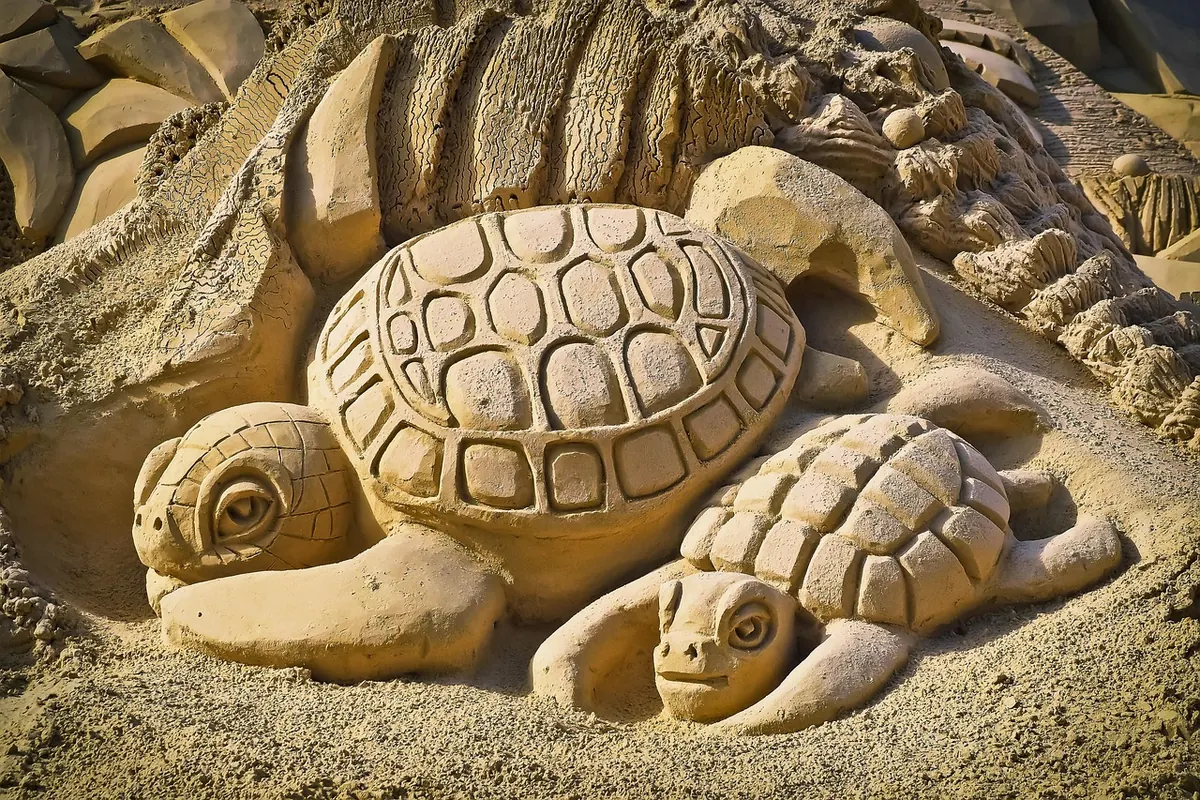
Texture is a language. Smooth passages can suggest skin or polished stone; stippled areas can suggest fur; deep cuts can suggest bark or rock. The question is whether the texture is consistent and controlled. A sculpture that mixes three unrelated textures without a reason often feels restless. Step closer, then step back again. Detail should reward both distances.
Creativity: The Idea Has to Survive the Snow
Creativity is not the same as novelty. A competition may have a theme, a size limit, or a rule about props and color. Judges look for an idea that is original enough to stand out but clear enough to be understood without a written explanation. A clever concept that only works in the artist’s sketch is not clever in snow.
Theme and Constraint
Read the event’s theme before you judge. If the theme is “harvest,” a literal pumpkin is not automatically weaker than an abstract interpretation, but the abstraction needs to earn its distance. Strong entries often take the theme at an angle: a tool, a gesture, a moment just before or after the obvious scene. They also respect constraints. If the rules forbid armatures or added materials, a sculpture that seems to rely on hidden support raises questions.
Originality Without Gimmicks
Look for a decision you have not seen before—an unusual viewpoint, a surprising use of negative space, a subject that fits the site. A gimmick, by contrast, is a single trick that does not connect to the rest of the piece. Judges tend to reward cohesion. The best creative entries make you think, “Of course—why didn’t I expect that?” rather than “That’s odd.”
Technical Difficulty: The Parts You Can’t See
Technical difficulty is where spectators often guess wrong. Big is not the same as hard. A large, simple form can be physically demanding to build, but a small, thin, cantilevered element may require more planning, packing, and nerve. Judges consider the engineering: how the snow was stacked, how weight is carried, how fragile sections are supported, and how much risk the team accepted without letting the piece collapse.
Look for evidence of control. Clean undercuts, thin fins, bridges, and open loops suggest a team that understood the material. So does a large piece that remains structurally calm. Cracks, slumping, and last-minute patching are not automatic failures—snow moves and weather changes—but they affect the final read. A repair that is integrated into the design is different from a repair that looks like an apology.
Consider the conditions. A sculpture carved in wet, heavy snow faces different challenges from one carved in dry, cold powder. Judges usually know what the week has been like. You can use the same context: a piece that holds crisp detail in warm sun may have required faster, more decisive work than one carved in a hard freeze.
A Spectator’s Walk-Through: How to Compare Sculptures Fairly
It is easy to fall in love with the first sculpture you see, or with the one that has the longest crowd. A simple routine will give you a fairer comparison. Bring a notebook or use your phone’s notes app; small impressions fade fast.
- Do a distance pass. Walk the whole site once without stopping. Note which silhouettes read immediately and which need decoding.
- Do a close pass. Return to each piece and look at edges, joins, texture, and the base. Check whether the detail supports the form.
- Check the sides and back. Judges do. A sculpture that only works from the front is a different piece from one that works in the round.
- Compare within categories. A two-person team and a large invitational team may follow different rules. Read the event signage so you are not comparing apples to snowballs.
- Write one sentence per piece. “Strong silhouette, weak detail at the base” is more useful than “I liked it.” Your notes will keep you honest when the light changes.
What Makes a Sculpture Falter
Most disappointments come from the same few places. A weak silhouette cannot be saved by ornate detail. A muddled concept cannot be saved by technical bravado. A fragile structure that loses a key element often loses the story with it. And a piece that ignores its site—blocking a walkway, turning its back on the main viewing angle, or fighting the light—feels less generous than one that welcomes the crowd.
Weather is the wild card. Snow settles, surfaces glaze, and shadows shift. Judges see the sculpture at a particular hour; you may see it at another. That is one reason to revisit before the awards. The piece you dismissed in flat morning light may come alive in the afternoon.
Before the Awards Are Announced
Use the final hour to revisit your top three. Look at them from the official viewing line and from the edges of the permitted area. Notice which ones still hold your attention when the crowd has moved on. Listen to the carvers if they are willing to talk; most are happy to explain a structural choice or a tool mark, and their comments will sharpen your eye for next year.
Respect the barriers and the snow. A finger pressed into a finished surface is a small vandalism, and a leaned-on base can crack. If the event has a people’s choice vote, use it, but vote for the piece you would still want to look at after an hour, not the one that photographed best in the first minute. Judging snow sculpture is not about finding a single flaw. It is about seeing how form, detail, creativity, and difficulty meet in a material that is already leaving.
Photo: 652234 / Pixabay